One Panel. One Inverter.
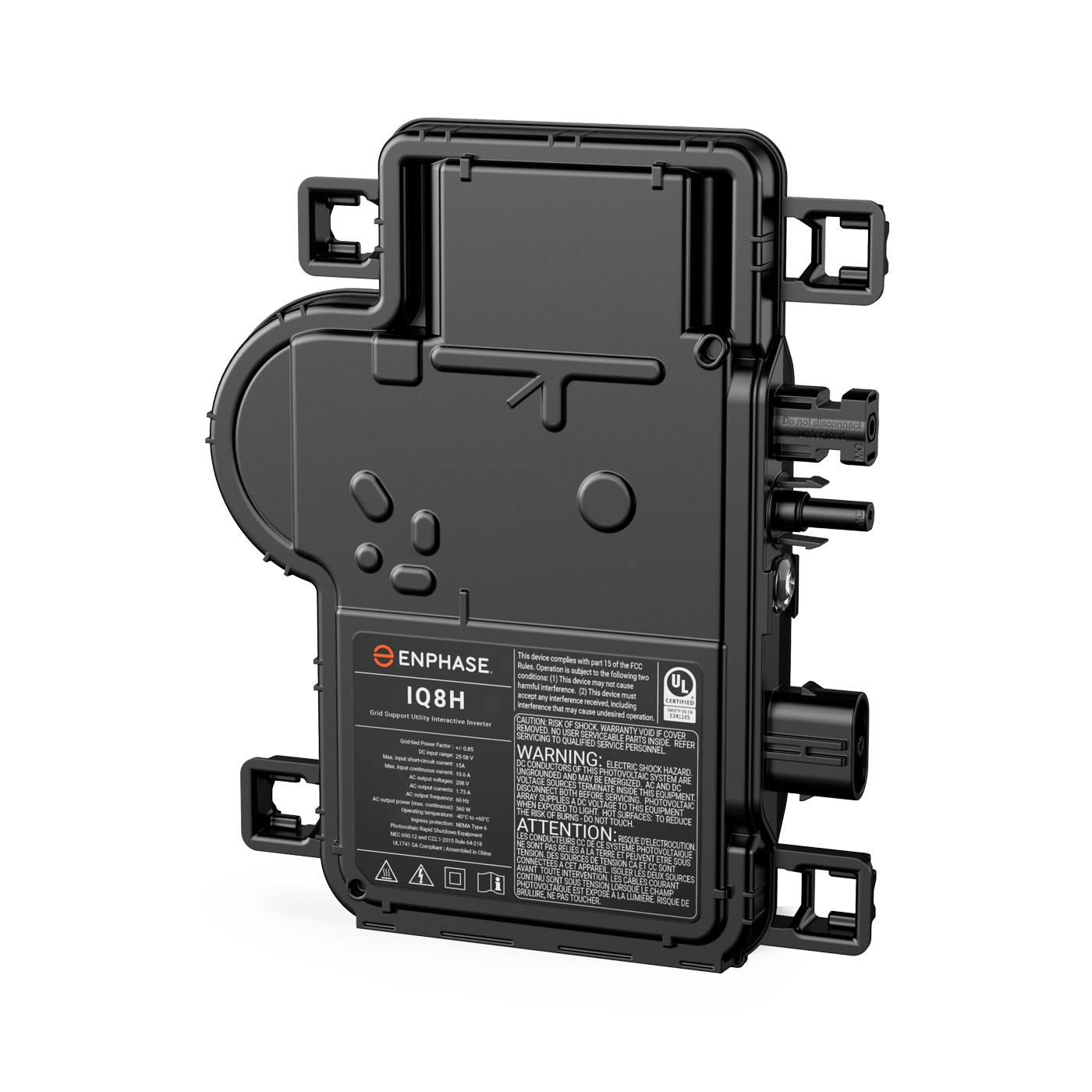
Every quote we write puts a dedicated Enphase microinverter under every single panel. Almost every quote we compete against does not: it puts your whole roof on one string inverter, or shares one budget micro between 2 or 4 panels.
That one choice decides what happens when a panel fails, what shade costs you, and whether anyone can actually see your system working. Here is why we refuse to compromise on it.
Every Panel, Reporting For Itself. Live.
This is 14.0 kW DC - Bridgewater, one of our real installations, drawn from its commissioning record. Hover any panel: that is its own microinverter reporting its own lifetime production. Lighter blue means more energy. A string inverter cannot draw this picture. A shared micro can only show you averages. One-to-one shows you the truth, panel by panel.
Every system we install gets this view. Browse the fleet or explore the map and open any system.
One Bad Panel. Three Very Different Outcomes.
Panels fail. Chimneys cast shade. Snow slides unevenly. The architecture you choose decides how much of your roof goes down with the problem.
String Inverter
All panels wired in series through one box.
The whole string suffers. One shaded or failing panel drags every panel in its string down with it. If the inverter itself dies, production is zero until it is replaced.
Shared Micro (2 or 4 to 1)
One budget microinverter split across 2 or 4 panels.
The group goes down together. Panels sharing one brain share one fate. And the monitoring can only show the group average, so a weak panel hides behind its partners for years.
One-To-One Enphase What we install
A dedicated microinverter under every panel.
One panel. That's it. The other 23 keep producing at full power, the failed one names itself in our monitoring, and we usually know before you do.
The One-To-One Dividend
Panel-Level Truth
We monitor 48,961 microinverters individually, every day, across 1,768 systems. When one goes quiet, it appears on our service dashboard by name and roof position. No guessing, no house calls to diagnose.
Shade Stays Local
Each panel runs its own maximum power point. The chimney shadow at 4pm costs you that panel's output for that hour, not the whole roof's. On real Nova Scotia homes with real trees, this is where systems win or lose.
No Single Point Of Failure
A string inverter is one box that everything depends on, and it typically needs replacing at 10 to 12 years. One failed Enphase micro takes down roughly 3% of a typical system, and the rest never notices.
Safer On Your Roof
Microinverters convert to AC right at the panel. No high-voltage DC strings running through your attic, and rapid shutdown is built in, not bolted on.
A 25-Year Warranty That Means It
Enphase warranties each micro for 25 years. Because every serial number is mapped to a roof position in our system, a warranty claim is precise: this device, this panel, this spot.
Grows With You
Add panels later without resizing or replacing a central inverter. Every panel arrives with its own brain, so expansion is addition, not surgery.
The Honest Version Of The Sales Pitch
Shared micros and string inverters are cheaper. That is their entire argument, and it is a legitimate one. If a competitor quotes you less, this is usually where the difference lives.
Our position is the same as it has always been: there is nothing wrong with budget equipment, as long as the price reflects that choice and you know what you are giving up. What you give up here is visibility and resilience for the next 25 years. We think that trade is worth refusing, and we price the good equipment fairly instead of the cheap equipment ambitiously.
Read the full argument The Case For String Inverters: What Is It Again?The Price Tag Test
Manufacturer pricing for the inverters on a typical 20-panel system. These are numbers you can verify yourself on any Canadian solar distributor's website, and we implore you to. If a quote is built on $1,500 of electronics, the price should say so.
Red Flags In Any Quote
- Won't name the exact inverter model, or is cagey about equipment details
- Vague warranty answers
- No breakdown of equipment versus installation cost
- Commissioned door-to-door salespeople
- A string inverter quote that claims you don't need optimizers
Questions Worth Asking
- "What specific inverter model, and what is its warranty?"
- "How does your price reflect the actual equipment cost?"
- "Can you show me the spec sheets?"
Pro tip: if they are already quoting Hoymiles or Solis, they are already offering the cheapest equipment available. The price might move. The equipment won't.
#NotAllSolarMadeEqual
Equipment specs and wholesale prices are public. Check them, compare them to your quotes, and make whoever you hire show their math. Ours is in the calculator, itemized.
What The Same Architecture Unlocks Later
Because IQ8 microinverters can form a grid of their own, the system you buy today can grow into sunlight backup or full battery backup without ripping anything out. String inverters cannot make this journey.
| Configuration Options | Solar only | Sunlight backup | Solar + battery with backup |
|---|---|---|---|
| Produce solar energy only when the grid is up | Produce solar energy even when the grid is down | Produce and save energy even when the grid is down | |
| Save money on my monthly utility bill | |||
| Manage my system's performance live, and over time, on a mobile app | |||
| Power basic appliances during an outage (phones, lights, fans, or a fridge) | - | With sunlight | Day and night |
| Seamlessly integrate an AC standby generator during an outage | - | ||
| Store excess solar energy in a battery to use more of your own power, even overnight or when the sun isn't shining as much | - | - | |
| Manage large appliances during an outage (air conditioner, EV charger, heat pump, washer/dryer, etc.) | - | - | |
| Participate in net metering and grid service programs to make money (where available) | - | - | |
| Power my whole home during an extended outage and eliminate my energy bills | - | - | |
| Export power to the grid at the optimal time for maximum economic benefits | - | - | |
| ENPHASE SYSTEM COMPONENTS |
|
|
|
See It, Then Price It
Open any of our installed systems and watch panels report individually. Then price your own roof with the same equipment, no pressure and no salesperson.
Go Quote YourselfSo, thinking about solar? Let's talk
The quickest way to get a quote is to fill in our contact form.
Get in touch
Ask about solar, batteries and getting started.
Pericles is an AI assistant. Our team confirms advice and estimates.